– Korean Air unveiled three unmanned aerial vehicles (UAVs) at the Seoul International Aerospace & Defense Exhibition (ADEX) 2025, taking place from October 17 to 24 at Seoul Airport in Seongnam and KINTEX in Goyang, Gyeonggi Province. Seoul ADEX is one of the world’s leading defense exhibitions, featuring participation from defense companies, military officials, and […]
Sensor solution provider HENSOLDT and AVILUS, a specialist in unmanned aerial systems (UAS), have announced their strategic partnership. The aim of the collaboration is the joint development and marketing of state-of-the-art sensor and ISR systems based on proven technologies and agile production capacities ‘Made in Germany’. The integration of powerful HENSOLDT sensors – including a […]
– Cummings Aerospace is using 3D printing technology in the continued development of the Hellhound S3 drone. With the use of 3D printing and modular open systems, Cummings can rapidly iterate the design of the product, harnessing test data and soldier feedback to inform each update. Cummings Aerospace recently completed a flight test demonstrating Hellhound S3’s […]
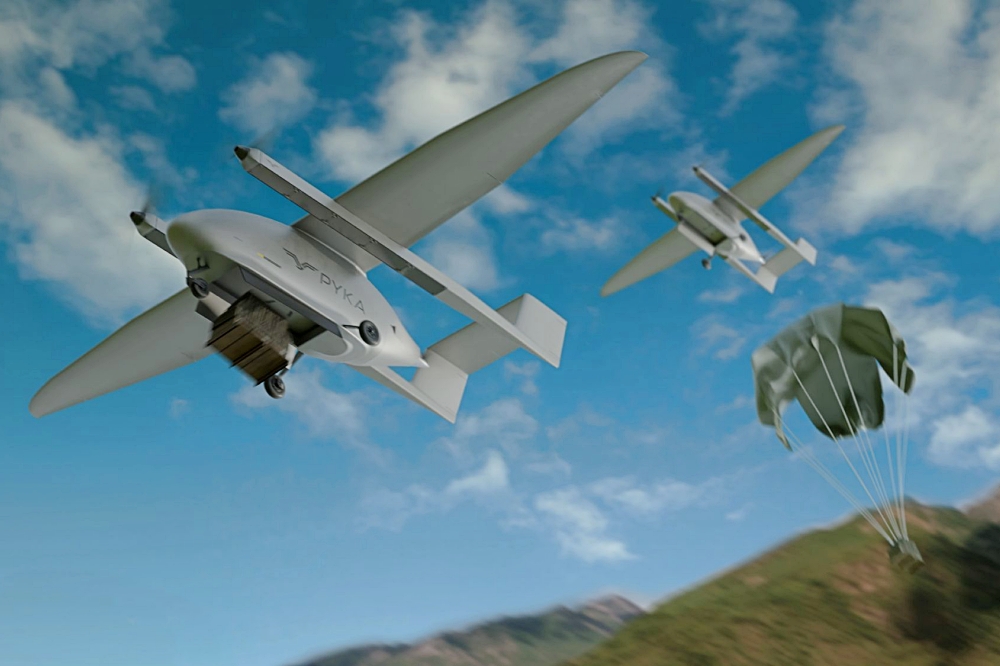
– Pyka announced that it has been selected by AFWERX for a Direct-to-Phase II (D2P2) SBIR focused on DropShip, a long-range, multi-mission cargo UAS platform, to address the most pressing challenges in the Department of the Air Force (DAF). The Air Force Research Laboratory and AFWERX have partnered to streamline the Small Business Innovation Research […]
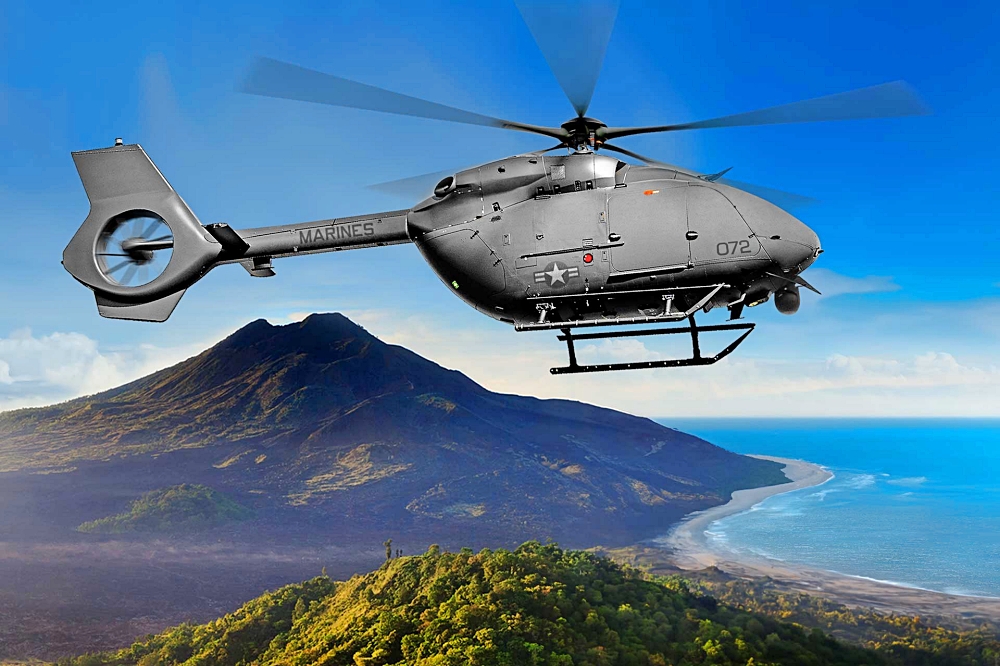
During the Association of the United States Army annual meeting held October 13 to 15 in Washington D.C., Airbus America introduced the MQ72C Lakota Connector, an unmanned helicopter developed to carry critical supplies where manned aircraft cannot. Designed for autonomous and semi-autonomous operation, the MQ72C provides a flexible option for long-range resupply missions in anti-access […]
Event partnership strengthens collaboration and innovation across the European UAS ecosystem The Commercial UAV Forum, Europe’s newest conference dedicated to industrial drone innovation, has announced a partnership with the Joint European Drone Associations (JEDA) as an Event Partner for its inaugural edition. The event will take place April 22–23, 2026, at RAI Amsterdam. Strengthening Europe’s […]
Exclusive sourcing agreement strengthens European supply chain and propulsion performance for autonomous search-and-rescue drones DefendEye has announced a new exclusive sourcing agreement with Poland-based EU Motors to provide brushless DC (BLDC) propulsion systems for its next generation of autonomous drones. The partnership marks a significant step in DefendEye’s transition to National Defense Authorization Act (NDAA)-aligned […]
Abby Smith brings decades of aviation experience and a strong record of advancing drone integration AX Enterprize, LLC, a leader in advanced aviation technologies and systems integration, has announced the appointment of Abigail “Abby” Smith as its new Chief Operating Officer. Smith’s extensive career in aviation policy and innovation at the Federal Aviation Administration (FAA) […]
For nearly a decade, the commercial drone industry had a go-to pitch: drones make dangerous work safer. Whether it was inspecting cell towers, checking power lines or surveying steep terrain, the safety argument was compelling, consistent and successful.But 2025 marks a turning point, and it seems like saving time is more critical for businesses’ bottom line.
According to the Global State of Drones 2025 report from drone market research company Drone Industry Insights, which used data collected in mid-2025 based on a survey of 768 people within the drone industry spanning 87 countries, “saving time” has officially overtaken “improving work safety” as the number one reason companies adopt drones.
After 13 years of covering the drone industry, to me this is a signal that the drone industry has crossed a critical threshold from novelty to necessity.
Graphic courtesy of Drone Industry Insights
The new hierarchy of value
DII’s survey asked drone operators to rank four core reasons for adoption on a scale from “not important” to “very important.” The results reveal a fundamental shift in how businesses view drone technology:
Saving time – 81% rated this as “very important”
Improving quality – 57% rated this as “very important”
Improving work safety – 52% rated this as “very important”
Saving costs – 37% rated this as “very important”
Compare this to previous years, when improving work safety was “almost without exception the most important reason,” according to the report. Safety hasn’t become less important, to be clear. It’s just that time savings have become even more critical.
Why time became king
You’ve heard the cliche before that time is money. With drones, the main adopters are predominantly in agriculture, construction and energy. These are sectors where project timelines directly impact profitability. A construction project that falls behind schedule bleeds money. A farm that can’t assess crop health quickly enough misses critical application windows. An energy company that can’t inspect infrastructure fast enough faces regulatory penalties and potential failures.
Second, drone technology has simply gotten faster and more automated. A decade ago, flying a drone for commercial purposes required considerable skill, manual piloting and time-intensive post-processing. Today’s systems feature automated flight planning, obstacle avoidance and AI-powered data processing that delivers results in hours instead of days.
The DII survey notes that operators using drones for their own operations “predominantly operate using mapping & surveying (38%) and inspection (19%) methods. The ability of drones to collect large amounts of data in a very short time is a big driver, especially when the alternative is manual labor.”
Quality beats cost
Another fascinating finding from DII’s survey: improving quality (57% rating it “very important”) significantly outranks saving costs (37%). This suggests the drone industry has successfully moved beyond competing on price alone and is winning on performance.
This makes sense when you consider what drones actually do. A higher-resolution site map means fewer construction errors. More frequent crop monitoring means earlier pest detection. More detailed infrastructure inspection means catching problems before they become catastrophes. These quality improvements have measurable financial impacts that dwarf the cost of the drone itself.
Safety still matters, just differently
The decline of safety from first place to third doesn’t mean companies care less about keeping workers safe. Rather, it suggests that safety is now table stakes. It’s an expected benefit rather than the primary justification.
This evolution mirrors what happened with other industrial technologies. When forklifts were introduced, the safety benefits were revolutionary. Today, nobody pitches forklifts primarily on safety — they pitch them on efficiency, with safety as an assumed advantage.
Drones have reached a similar point. The fact that a drone can inspect a cell tower without requiring someone to climb it is still valuable, but it’s no longer the headline. The headline is that the inspection can happen in 30 minutes instead of half a day, and the data is higher quality than what a climber with a camera could capture.
What this means for the industry
For drone manufacturers, this finding suggests that development priorities should focus on speed and automation. Faster flight times, quicker data processing, more seamless integration with existing workflows — these are what customers value most.
For drone service providers, the message is equally clear: sell outcomes, not activities. Don’t pitch “we’ll fly your site with a drone” (that’s the activity). Pitch “you’ll have actionable data by end of day” (that’s the outcome).
For companies considering drone adoption, this shift confirms what many have already discovered: the ROI of drones isn’t primarily about cost reduction, it’s about doing things faster and better than your competition.
The evolution from “drones make work safer” to “drones save time” represents the commercial drone industry growing up. Safety was the permission to experiment. Speed is the reason to commit.
In 2026, time will be the most valuable commodity in business, and drones have proven they can give it back.
Critical drone programs and rulemaking at the FAA are slowing or pausing as the government shutdown enters its fourth week, while core flight safety operations continue. FAA Under Pressure as Shutdown Drags On The government shutdown has entered its fourth week, and its impact is spreading across the aviation community. While essential safety functions continue, […]

 – Korean Air unveiled three unmanned aerial vehicles (UAVs) at the Seoul International Aerospace & Defense Exhibition (ADEX) 2025, taking place from October 17 to 24 at Seoul Airport in Seongnam and KINTEX in Goyang, Gyeonggi Province. Seoul ADEX is one of the world’s leading defense exhibitions, featuring participation from defense companies, military officials, and […]