The U.S. Department of State’s Rewards for Justice (RFJ) program, which is administered by the Diplomatic Security Service, is offering a reward of up to $15 million for information leading to the disruption of the financial mechanisms of Iran’s Islamic Revolutionary Guard Corps (IRGC) and its various branches, including the IRGC-Qods Force (IRGC-QF), which are […]
In the three years since Russia launched its full-scale invasion, Ukraine has almost certainly become the largest producer of drones in the Western-aligned world. Early workshop tinkering on mainly commercial Chinese drones evolved into steadily more professional and massive production of domestic unmanned aerial systems (UAVs). The industry’s rapid growth has given Ukraine a fighting chance against […]
The Miles M.20 was an all-wood lightweight fighter and interceptor from Britain during World War II. This video looks at the idea of an emergency fighter, and the more technologically advanced examples from Germany in WW2, and some more simplistic examples from America. It then moves over to Britain’s example in the M.20, intended to […]
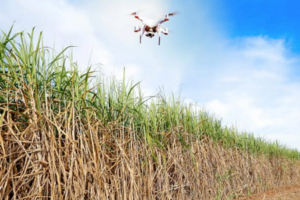
After receiving training on using drones for inspection purposes, employees of the Ministry of Agriculture and Livestock (Mapa) of the State of São Paulo began adopting the technology in the field. The first operation took place this week, when an unmanned aircraft flew over and mapped experimental areas of genetically modified sugarcane. The product has […]
New drone hub in Kurnool aims to create jobs, attract global investment, and build India’s leadership in drone tech Garuda Aerospace Invests in Future of Drones with Andhra Pradesh Drone City Garuda Aerospace has committed INR 100 crore (approximately USD 12 million) to the development of the Andhra Pradesh Drone City in Kurnool. CEO Agnishwar […]
Industry stakeholders highlight need for federal office, incentives, and training programs to support U.S. innovation in robotics and AI American robotics companies are calling for a national robotics strategy to ensure the United States remains competitive in the rapidly advancing global robotics industry, according to a recently published Associated Press article. Executives from major robotics […]
New company builds on Swoop’s legacy with open platform strategy and plans for continued growth Kite Aerospace Pty Ltd (Kite Aero), a newly launched company in uncrewed aviation, has announced the successful acquisition of key assets from Swoop Aero. The deal includes the Kite drone and Swoop’s well-known drone operations software platform. The acquisition ensures […]
In a year already marked by some of the most devastating wildfires in recent history — including the catastrophic Los Angeles fires estimated to cause more than $250 billion in damages — a breakthrough in drone technology offers a glimmer of hope in the race to mitigate climate-driven disasters. Berlin-based Dryad Networks this week unveiled a drone prototype called Silvaguard. It’s designed to detect, locate, monitor and eventually suppress wildfires.
Dryad Networks’ Silvaguard could mark a pivotal moment for the drone industry and a critical step forward in fighting wildfires, which are becoming more destructive, fast-moving and frequent.
The wildfire crisis is growing faster than we can fight it
A prototype of Dryad’s Silvaguard drone system. (Image courtesy of Dryad Networks)
The unveiling of Dryad’s Silvaguard drone system comes as scientists sound the alarm over the increasing speed and severity of wildfires. A Science study from October 2024 analyzing 60,000 U.S. fires from 2001 to 2020 found that “fast fires” (which are defined as those growing over 1,620 hectares in a single day) caused 78% of structure losses and 61% of suppression costs. More troubling is that those growth rates are more than doubling in the Western U.S.
“With wildfires growing more destructive each year, ultra-early detection alone may no longer be enough as response time of traditional fire suppression methods often takes too long,” said Carsten Brinkschulte, CEO and co-founder, Dryad Networks, in a prepared statement. “We need to extend to rapid and autonomous suppression systems. Dryad is in a unique position to deliver on this vision, because our Silvanet system detects fires within minutes, when the limited capabilities of a drone-based response may still have a chance to extinguish a fire.”
Inside Silvaguard: A leap toward autonomous wildfire response
(Image courtesy of Dryad Networks)
So what is Dryad’s Silvaguard, exactly? Silvaguard is the name of the product that sums up a full fire suppression system. It includes everything from solar-powered drone hangars to store the drones to the drones themselves — which are filled with tech including obstacle avoidance cameras and thermal imaging for fire detection. As far as the fire suppression system, that includes tech such as a sonic cannon for extinguishing fires.
Silvaguard pairs with Dryad’s Silvanet, a large-scale sensor network. Silvanet has already been deployed across 50 global installations that detect wildfires at their earliest spark. Often, Silvanet can detect fires before visible flames emerge. Once a sensor is triggered, the Silvaguard drone automatically deploys from a solar-powered hangar and flies to the source, providing overhead optical and infrared imagery in real-time.
In a demonstration in March 2025 in Germany, Dryad simulated a wildfire scenario where Silvanet sensors detected a small, controlled fire. A Silvaguard drone autonomously navigated to the location, transmitted real-time footage, and marked a first milestone toward the system’s future: autonomous suppression.
Future versions of the drone aim to carry acoustic wave suppression systems. This novel approach uses targeted sound frequencies to smother fires at their origin.
The drone industry’s role in fighting climate change
The Silvaguard project represents a growing trend of drone technology being deployed not just for observation or inspection, but for direct environmental intervention.
This prototype arrives as the drone industry evolves beyond photography and delivery toward AI-powered autonomy and mission-critical applications — especially in disaster response and environmental protection. In this case, it’s part of a larger mission to reduce the 20% of global CO₂ emissions attributed to wildfires.
Dryad said in a statement to The Drone Girl that, by 2030, it hopes to prevent 3.9 million hectares (9.6 million acres) of forest from burning, potentially averting 1.7 billion metric tons of CO₂ emissions.
What’s next for Silvaguard?
A prototype of Dryad’s Silvaguard drone system. (Image courtesy of Dryad Networks)
Dryad is now entering Phase 2 of the Silvaguard roadmap, focusing on integrating suppression technologies, refining drone autonomy and optimizing deployment logistics for large-scale rollouts.
Silvaguard’s key expansion phase is partially funded by a €3.8 million grant from the European Union’s European Region Development Fund (ERDF).
Real-world deployment of this system could come from partnerships with governments, utilities, conservation groups, and even insurance companies looking to mitigate risk.
Potential markets for Silvaguard include:
National fire departments and forestry agencies in the U.S., Canada, Australia, Southern Europe and South America
Utility companies and infrastructure operators hoping to avoid disasters like PG&E’s role in California wildfires
Private landowners and forestry firms protecting commercial assets
Environmental nonprofits supporting reforestation and biodiversity initiatives
Eventually, Dryad said that it envisions a global network of solar-powered hangars housing fleets of Silvaguard drones, ready to autonomously respond within minutes to any wildfire threat.
As climate change escalates the frequency and ferocity of wildfires, technologies like Silvaguard — fusing AI, IoT, and autonomous drones — may prove to be not just innovative, but essential.
A breathtaking aerial view of a remote island near Ushuaia, home to a lighthouse, penguins, and sea lions, filmed by drone in the heart of Patagonia, Argentina.
Perfect for travel vlogs, documentaries, or your next creative project.
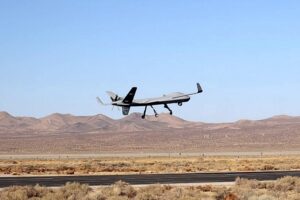
– General Atomics Aeronautical Systems, Inc. and the Belgian Ministry of Defence completed the first flight of a new MQ-9B SkyGuardian Remotely Piloted Aircraft (RPA) that will be the first SkyGuardian delivered to Belgium as part of a four-aircraft purchase. The flight was based out of GA-ASI’s Desert Horizon Flight Operations Facility in El Mirage, […]

 The U.S. Department of State’s Rewards for Justice (RFJ) program, which is administered by the Diplomatic Security Service, is offering a reward of up to $15 million for information leading to the disruption of the financial mechanisms of Iran’s Islamic Revolutionary Guard Corps (IRGC) and its various branches, including the IRGC-Qods Force (IRGC-QF), which are […]



 Perfect for travel vlogs, documentaries, or your next creative project.